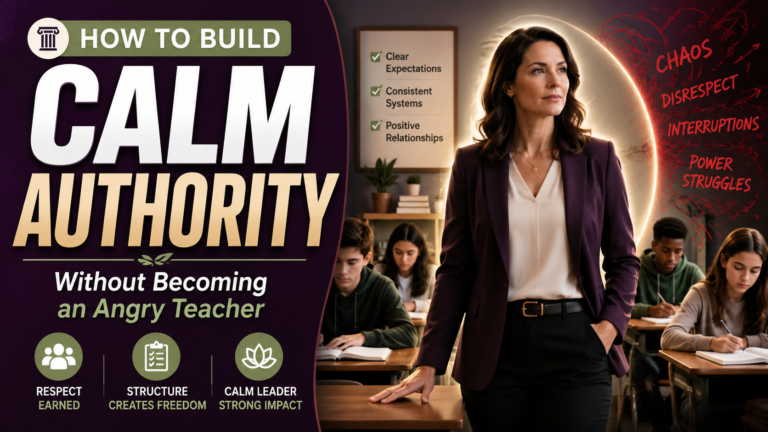
The Psychology Behind Classroom Power Struggles and How to Defuse Them

Keep Building Classrooms That Do Not Collapse Under Pressure
Classroom power struggles are not solved by louder voices, longer threats, or public battles. They are solved by systems, language, emotional control, and teacher confidence. If this article helped you rethink how correction works, do not just read it and move on. Use it. Share it with a teacher, HOD, principal, school owner, or colleague who is tired of classroom drama being mistaken for classroom management.
At Tomphonics Academy, we are building practical tools for teachers and school leaders who want classrooms that are calmer, sharper, and easier to lead. You can explore our teacher resources, classroom management tools, school leadership guides, planning templates, and digital products here: www.tomphonicsacademy.store/store.
If you want more articles like this on classroom psychology, lesson architecture, school systems, teacher authority, and the future of teaching, subscribe to Classroom Future and stay with the conversation. Also, use the comment section below: what kind of classroom power struggle do you see most often — refusal, argument, silence, side-talk, disrespectful tone, or attention-seeking behaviour?
Drop your answer in the comments, share this article with another educator, and let us build a better teaching culture one classroom at a time.
Questions teachers ask
What causes power struggles in the classroom?
Classroom power struggles usually happen when a student feels controlled, embarrassed, ignored, or unfairly treated, and the teacher responds in a way that makes the conflict public. The issue may begin with behaviour, but it grows when dignity, status, and authority become part of the moment.
How can a teacher stop a power struggle quickly?
The fastest way is to lower the emotional temperature, use fewer words, give a clear instruction, and offer a controlled choice. The teacher should avoid arguing publicly and return the focus to learning as quickly as possible.
Should teachers ignore defiant behaviour?
No. Defiant behaviour should be addressed, but not always in the heat of the moment. A teacher can hold the boundary immediately while saving the deeper conversation or consequence for a calmer, more private time.
What should I say when a student refuses to follow instructions?
Say the expectation clearly and give two acceptable choices. For example: “The task is to begin question one. You can start here now, or move to the side table and begin there.” This keeps the teacher in charge without turning the refusal into a public argument.
How can school leaders reduce classroom power struggles across the school?
School leaders should create shared behaviour routines, train teachers in correction language, and observe how behaviour is addressed during lessons. Consistency matters because students respond better when expectations and consequences are predictable across classrooms.