Your Best Lessons Fall Apart in the First 7 Minutes. Rescue Them at the Door.
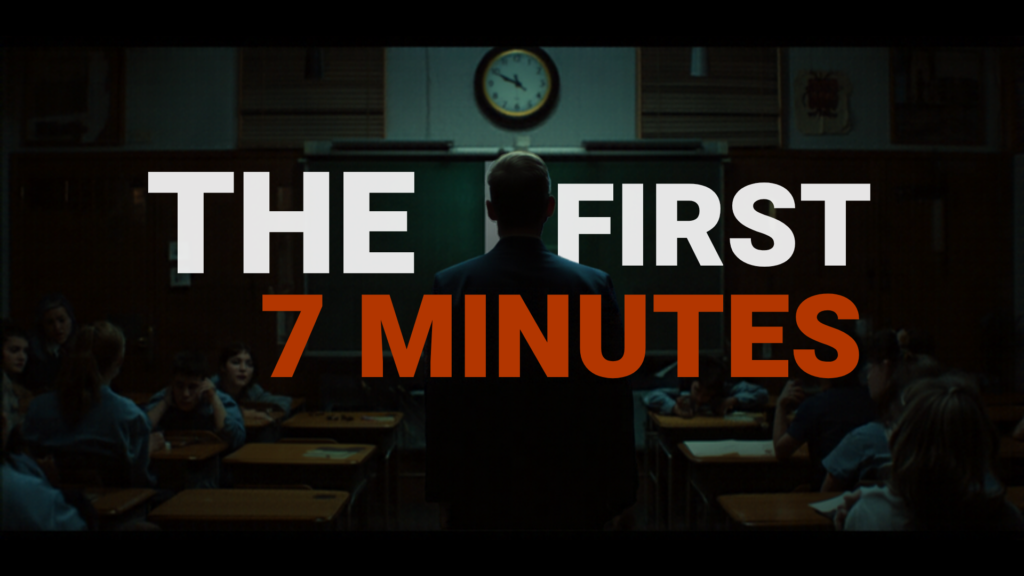
You planned a great lesson. By minute seven it’s already slipping: half the class is still unpacking, the projector won’t connect, and two students are arguing about a seat. The first seven minutes decide the next fifty. Here’s why, and what to do instead.
You spent an hour planning this lesson. The main activity is genuinely good. You’re excited about it.
Then the bell goes. Students drift in over four minutes. Someone needs a pen. Someone needs the toilet. The laptop won’t connect to the projector. You take the register while three conversations carry on. By the time you say “Right, today we’re going to…”, it’s minute seven and half the class has decided this lesson is going to be like every other one.
The main activity never gets the attention it deserved, not because it was a bad idea, but because the lesson lost its grip before it began.
This happens to brilliant teachers every day. Most lesson planning focuses on the middle: the explanation, the task, the activity. Very little attention goes to the first seven minutes, even though that’s when students decide how seriously to take the next fifty.
This article is for teachers at any level who want lessons to start with momentum. You’ll learn why the opening matters so much, the four things that kill it, a seven-minute opening routine you can use tomorrow, and how to adapt it for different ages and subjects.
1. Why the First Seven Minutes Matter So Much
Students decide early
Within the first few minutes, students make quick judgments: Is this teacher in charge? Is this going to be interesting? Is it worth trying today? Those judgments shape how they behave for the rest of the lesson.
Momentum is hard to restart
A lesson that starts slowly has to fight for attention later. A lesson that starts with a clear routine and an immediate task carries that energy forward. It’s much easier to keep momentum than to rebuild it.
Lost minutes add up
Seven minutes lost at the start of every lesson, five lessons a day, is thirty-five minutes a day. Over a school year, that’s many full days of learning, gone before anything began.
What not to do
Don’t blame the students for slow starts. If there’s nothing to do when they walk in, they’ll fill the gap with whatever is most interesting. Usually that’s each other.
2. The Four Things That Kill the Opening
Killer 1: Nothing to do on arrival
Students walk in, sit down and wait. Waiting becomes chatting. Chatting becomes the lesson’s default.
Killer 2: Admin first
Register, notices, handing back books, finding the presentation. All necessary. All done while students watch, so all dead time.
Killer 3: A slow, vague start
“Okay, so today we’re going to be looking at…” followed by a long explanation of objectives before students do anything. Attention drops before the content arrives.
Killer 4: Technology trouble
The projector, the login, the video that won’t play. Five minutes of fiddling with your back to the class sends a clear message: nothing is happening yet.
3. The Seven-Minute Opening Routine
Minute 0–1: Threshold
- Stand at the door. Greet students by name.
- A short, warm instruction: “Morning. Straight in, task’s on the board.”
Minutes 1–4: Do Now
- A task on the board, ready before students arrive, that they can do without your help.
- Three to five short questions: retrieval from last lesson, a quick puzzle, a prediction about today’s topic.
- Silence or quiet work. You take the register while they work.
Minutes 4–6: Quick check and hook
- Go through two or three answers. Cold call rather than asking for volunteers, so everyone stays ready.
- Then a hook: one question, image, object or short story that creates a reason to care about today’s content.
Minutes 6–7: The point
- One sentence on what students will be able to do by the end, and why it matters.
- Then straight into teaching.
Why this works
There’s no gap. From the door to the first explanation, students always have something specific to do. You handle admin while they work. And by minute seven, they’ve already succeeded at something, heard a reason to care, and know where the lesson is going.
4. What Makes a Good Do Now Task
The rules
- Doable alone, without you. If students need help to start, it’s not a Do Now.
- Short. Three to four minutes of work.
- Useful. Retrieval from previous lessons is ideal. It strengthens memory and shows you gaps.
- Same place, same format, every lesson. Students should know where to look without being told.
Examples
- Math: Three quick calculations using last week’s method, and one “spot the mistake”.
- English: “Write one sentence using the word ‘ominous’ about the picture on the board.”
- Science: “Label this diagram from memory” or “Predict: what will happen when…?”
- History: “Put these three events in order” or “What was the most important cause, and why? One sentence.”
- Primary: “Draw and label something you learned yesterday” or a quick number bonds grid.
- Languages: “Translate these three phrases” or “Answer this question in the target language.”
What not to do
- Don’t make the Do Now so hard that half the class sits waiting for you.
- Don’t skip going over it. If it’s never checked, students learn it doesn’t matter.
5. Hooks That Make Students Want to Know More
A hook is a short moment that makes the content feel worth learning. It should take under two minutes.
Hook ideas
- A surprising question: “Why do you think a whole city would deliberately flood its own streets?”
- An object: Hold up something real and ask what it has to do with today’s topic.
- A mystery image: Show part of a picture and ask what’s happening.
- A mini-story: Thirty seconds about a real person or event connected to the topic.
- A wrong answer: “Someone told me that heavier objects always fall faster. Who agrees?”
Say this
- “Before I tell you anything, what do you think is going on in this picture?”
- “Hands down. I’m going to choose three people to guess. Then we’ll find out who was closest.”
- “By the end of today, you’ll be able to answer this question. Right now, most people get it wrong.”
6. Fix the Technology Problem for Good
The strategy
- Set up before students arrive. If you teach back-to-back, open everything at the end of the previous lesson while students pack away.
- Have a no-tech backup. The Do Now should be on the board, on paper, or both, so it never depends on a projector.
- Keep one tab, one file. Fewer clicks, fewer failures.
- If tech fails, don’t fix it with your back to the class. Give a task first, then fix it.
What not to do
Don’t say “Bear with me” and spend three minutes troubleshooting while the class watches. That’s an invitation to fill the time.
7. Adapting the Routine
Younger students
Use a calm entry routine: hang up coats, put water bottles away, sit on the carpet. Make the Do Now a simple, familiar activity they can do independently, like a quick drawing or a matching task. Add a song or chant as a transition signal.
Older students
Keep the Do Now challenging enough to respect them. Use cold calling to keep everyone accountable. A link to real life or exams in the hook matters more.
After lunch or PE
Expect more energy. Make the Do Now slightly longer and quieter, and greet at the door even more deliberately.
A real classroom example
A secondary geography teacher had a 10th grade class that took eight minutes to settle every lesson. She introduced the seven-minute routine: door greeting, three retrieval questions on the board, cold-called answers, then one surprising photo as a hook. The first week was bumpy. By week two, students walked in and started without being told. She calculated she’d won back about twenty-five minutes of teaching a week with that one class, and their end-of-unit test scores were the best she’d had with them.
For more on calm starts and routines, read classroom management is a system and what actually works in modern lesson planning.
8. When the Opening Still Goes Wrong: Five Recovery Moves
Even with a strong routine, some starts will go badly. A fire drill, a fight in the corridor, a wet lunchtime or a substitute the lesson before can send students through your door already unsettled. The skill isn’t avoiding every bad start. It’s recovering within a few minutes instead of losing the whole lesson.
Move one: stop and reset, out loud
When the room is clearly off track, don’t push on and hope. Stop everything.
Say this: “Pens down. We’re going to start again. I’m going to step outside, and when I come back in, we begin properly.”
Then actually step outside for five seconds and walk back in as if it’s the start of the lesson. It feels strange the first time. It works because it gives everyone, including you, a clean line between the messy start and the real one.
Move two: shrink the first task
If students can’t settle into the planned starter, it’s probably too long or too demanding for their state of mind. Replace it with something they can finish in two minutes: three quick recall questions, one sentence to complete, or a single diagram to label. Early success calms a room faster than a lecture about behavior.
Move three: use silence as a tool
Stand at the front, still and quiet, and wait. Don’t fill the gap with repeated instructions. Most classes will notice within thirty seconds, and students will start quietening each other. Silence feels long to you, but it’s one of the most powerful signals a teacher has.
Move four: name the cause, then move on
If something real has happened, such as an incident at break or a frightening event in the news, acknowledge it briefly.
Say this: “I can tell something’s happened at lunch. If anyone needs to talk about it, see me at the end. For the next forty minutes, we’re doing this together.”
Ignoring something everyone is thinking about rarely works. Naming it, then setting it aside, usually does.
Move five: cut, don’t cram
After a lost ten minutes, the temptation is to rush through everything you planned. Resist it. Decide which one part of the lesson matters most and teach that well. Move the rest to next lesson. A shorter lesson that lands is far better than a full lesson nobody remembers.
Review it afterwards
Take two minutes after a rough start to jot down what happened before the lesson, which move you used and how quickly the class settled. Patterns appear quickly: the class after PE, the period after lunch, the day after a long weekend. Once you can see the pattern, you can plan a calmer opener for those lessons in advance, and many bad starts stop happening at all.
What Actually Makes the First Seven Minutes Work
- No gap: greet at the door and have a task ready before students arrive.
- Admin while they work, never while they watch.
- Retrieval first, then a short hook, then one clear sentence on the point.
- Same routine every lesson, so students start without being told.
- Tech set up before the bell, with a no-tech backup.
Try This Tomorrow
- Write a three-question Do Now for each lesson tomorrow, on the board before students arrive.
- Stand at the door and greet every student.
- Take the register while they do the Do Now.
- Prepare one hook: a question, image or object for each lesson.
- Time how long it takes your class to start working. Repeat the routine all week and time it again on Friday.
Keep Reading
- 7 Questions Teachers Should Answer Before Writing the Lesson Planning Format
- What Is Lesson Architecture? A Practical Guide for Modern Teachers
- Students Mocking Your Lessons With “Brain Rot” Slang? Don’t Ban It Yet. Try This First.
Frequently Asked Questions
How should a lesson start?
With no waiting time. Greet students at the door, have a short independent task on the board, take the register while they work, check answers quickly, then use a brief hook and state the lesson’s purpose in one sentence.
What is a Do Now activity?
A short task, usually three to five minutes, that students complete independently as soon as they arrive. It often reviews previous learning and gives the lesson an immediate, focused start.
Why is the start of a lesson so important?
Students quickly form judgments about whether a lesson is organized and worth their effort. A strong start builds momentum, prevents low-level disruption and saves significant learning time over a year.
How do I stop wasting time at the start of lessons?
Remove dead time: have the task ready before students arrive, do admin while they work, set up technology in advance and use the same routine every lesson.
What is a good lesson hook?
A short moment that makes students want to learn the content, such as a surprising question, a mystery image, a real object, a mini-story or a common wrong answer to challenge.
Want Every Lesson to Feel Like It Matters?
The first seven minutes are where students decide whether your lesson is worth their best. Teach Like It Matters is full of practical ways to make every lesson purposeful and engaging, from the way you start to the way you end. Get Teach Like It Matters here.
How did this land?
Tap a reaction. It helps us write more of what teachers need.


Join the conversation
No comments yet. Be the first to share how this works in your classroom.