Supporting Student Mental Health Is Eating 8 Hours of Your Week. Where Does Your Job End?
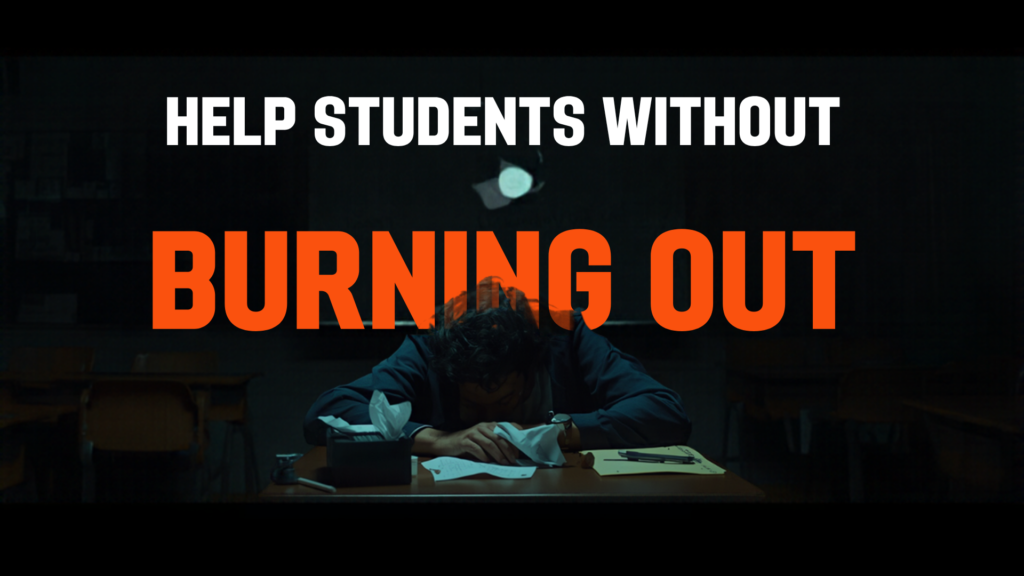
You care about your students’ wellbeing. That’s not the problem. The problem is that no one ever told you where your part ends and someone else’s begins.
A student lingers after class and tells you something heavy. Another one stops eating lunch. A parent emails at 10pm about anxiety. A kid in third period puts their head down every day, and you’re the only adult who seems to notice.
So you notice. You check in. You stay late. You write the email to the counselor, then follow up when nobody replies. You carry it home.
You’re not imagining how much time this takes. In RAND’s 2026 State of the American Teacher survey, teachers reported spending about eight hours a week supporting student well-being, roughly two of those outside contract hours. Half said this work has become harder than it was two years ago. And around three in four had referred a family to social services in the past year.
That’s a second job sitting on top of the first one.
This guide is for K–12 teachers who want to keep caring for students without burning out. It’s not about caring less. It’s about knowing which parts are yours, which belong to trained support staff, and how to set limits that protect both you and your students. One important note: nothing here replaces your school’s procedures. If a student may be in danger, follow your school’s safety protocol immediately and involve the appropriate staff.
1. Why student mental health support is eating your week
Teachers have always cared about students’ wellbeing. What’s changed is the volume and the lack of clear limits.
Why this happens
- More students need support. Teachers across the country report more anxiety, withdrawal and stress in their classrooms.
- Support staff are stretched. When counselors and social workers have large caseloads, students often turn to the adult they see every day: you.
- The role has no edges. Your job description says “teacher.” Nobody wrote down where teaching ends and counseling begins, so the line moves every time a student needs something.
- Caring is quiet work. Check-ins, emails and late conversations rarely show up on any schedule, so nobody, including you, sees how much they add up.
What not to do
- Don’t assume the answer is to care less. Students notice when adults pull away, and the relationship you’ve built is valuable.
- Don’t try to be a therapist. You aren’t trained for it, and trying can put both you and the student in a difficult position.
2. Know the three roles: notice, connect, refer
The most useful boundary is a simple one. Your role in student mental health has three parts. Everything outside them belongs to someone else.
Your part
- Notice. You see students every day. You’re often the first to spot a change in mood, attendance, eating, effort or friendships.
- Connect. You make students feel seen and safe in your classroom. A warm, consistent relationship matters.
- Refer. When something concerns you, you pass it on to the right person using your school’s process.
Not your part
- Diagnosing anything.
- Providing ongoing counseling or therapy.
- Promising a student you’ll keep something secret.
- Solving a family’s problems outside school.
Write these down and keep them somewhere you’ll see them. When you’re tired and a student is struggling, this is the list that keeps you from taking on more than you can carry.
3. Learn your school’s referral process before you need it
Many teachers stay late because they don’t know exactly who to tell or how. A clear process saves hours, and it gets students to the right help faster.
The strategy
Find out, this week:
- Who handles student mental health concerns: counselor, social worker, psychologist, nurse?
- How do you refer: a form, an email, a system, a conversation?
- What counts as urgent, and who do you call if it can’t wait?
- What happens after you refer? Will someone follow up with you?
Write the answers on one card and keep it at your desk. Then use the process every time, instead of trying to handle concerns yourself.
Say this
To a counselor or support staff member:
“I wanted to flag a concern about one of my students. Here’s what I’ve noticed over the past two weeks. What’s the best way for me to support them in class while you take the lead?”
That last question matters. It keeps you involved in the classroom part without taking over the support part.
What not to do
- Don’t wait until you’re sure something is wrong. If you’re worried, refer. Trained staff can decide what happens next.
- Don’t keep a concern to yourself because you don’t want to “bother” a busy counselor. Passing it on is your job.
4. Set limits on when and how students can reach you
Late-night messages and lunch-hour conversations feel small one at a time. Together, they erase your rest.
The strategy
- Set communication hours. Tell students and families when you respond to messages, for example during school hours. Follow your school’s policy on communication with students.
- Use a short holding response. When something comes in late, a brief reply can acknowledge it without opening a long conversation, unless it’s urgent.
- Protect some of your breaks. You don’t have to spend every lunch hour with students. Choose a few days a week that are yours.
- Point to round-the-clock help. Make sure students and families know who to contact outside school hours. Your school counselor can tell you what resources your school shares.
Say this
To a student who wants to talk at the end of a long day:
“I really want to hear this. I’ve got five minutes now, and I want to make sure you get more support than I can give alone. Can we also go see Ms. Rivera tomorrow morning together?”
What not to do
- Don’t promise a student you’ll be available anytime. You can’t keep that promise, and it puts pressure on both of you.
5. Build care into your classroom, not your evenings
Some of the most powerful support you give doesn’t happen in one-on-one conversations. It happens in how your classroom runs every day.
The strategy
- Predictable routines. Students who are struggling often feel calmer when they know what to expect.
- A quick daily check-in. A one-question mood check at the door or on an exit ticket helps you notice changes without extra meetings.
- A calm corner or reset option. Some classrooms give students a short, structured way to take a break and come back.
- Warm greetings. Saying each student’s name at the door takes seconds and tells every student they’re seen.
These build care into the day, so less of it has to spill into your evenings.
What it looks like in practice
Picture a middle school teacher who adds a one-question check-in to her exit tickets: “How are you feeling today, from 1 to 5?” Most days it takes thirty seconds to scan. When a student who usually writes 4 writes 1 three days in a row, she notices early, checks in briefly, and refers to the counselor. She didn’t need extra meetings to notice. The routine did the noticing for her.
6. Look after the person doing the caring
Supporting students who are struggling takes something out of you. Ignoring that doesn’t make you a better teacher. It makes you a more tired one.
The strategy
- Talk to colleagues. Sharing the load with a trusted coworker helps, as long as you protect student privacy.
- Debrief hard moments. After a difficult conversation or referral, take a few minutes to reset before your next class.
- Use your own supports. Many districts offer employee assistance programs. Check what yours provides.
- Notice your own warning signs. Trouble sleeping, dreading school or feeling numb are signals to slow down and get support.
If teacher burnout is creeping in from more than one direction, this guide on the hidden cause of teacher burnout may help. And if you’re questioning whether to stay at all, read thinking of quitting teaching mid-year before you decide.
7. Talk to your administrators about the load
Eight hours a week is a staffing issue, not just a personal one. Your administrators may not see how much time this work takes unless someone shows them.
The strategy
Keep a simple log for two weeks: each time you spend time on student wellbeing outside teaching, note the minutes and the type of support. Then share it, without student names, in a conversation with your administrator or at a staff meeting.
Say this
“I tracked the time I spent on student wellbeing for two weeks. It came to about seven hours a week, mostly outside class. I want to keep supporting students, but I need clearer referral routes and some protected time. Can we talk about what the school can put in place?”
Staffing, caseloads and support systems are decisions for school and district leaders. Your data helps them make better ones.
8. What to say when a student opens up
Many teachers stay quiet or say too much because they’re worried about getting it wrong. A few steady phrases help you stay supportive and inside your role.
The strategy
Listen more than you talk. Thank the student for telling you. Don’t rush to fix it, and don’t promise secrecy. Then connect them to the right person.
Say this
“Thank you for telling me. I’m really glad you did.”
“That sounds hard. You don’t have to deal with it on your own.”
“I care about you, so I’m going to make sure someone who can help more knows about this. Let’s go together.”
If a student asks you to keep something secret:
“I can’t promise to keep everything private, because if you’re not safe, I need to get you help. But I’ll only share it with people whose job is to help you.”
What not to do
- Don’t ask a long list of probing questions. Gather enough to refer, then let trained staff take it from there.
- Don’t share the student’s story with colleagues who don’t need to know.
- Don’t treat a quick hallway chat as the end of it. If you’re concerned, follow your school’s referral process the same day.
What actually works: the short version
You can care deeply about students without carrying everything yourself:
- Your role is to notice, connect and refer. Diagnosis and counseling belong to trained staff.
- Know your referral process before you need it, and use it every time.
- Set limits on when and how students can reach you.
- Build care into classroom routines so less of it spills into your evenings.
- Look after yourself and use the supports available to staff.
- Show your administrators the real time this work takes.
Try this tomorrow
- Write down your school’s referral process on one card.
- Add a one-question check-in to your exit ticket.
- Choose two lunch breaks this week that are just for you.
- Decide your message hours and tell students.
- Start a two-week log of time spent on student wellbeing.
- Find out what your district’s employee assistance program offers.
Keep Reading
- Students Who Rush, Guess and Quit on Hard Questions Are Missing One Skill. You Can Teach It.
- The Student Who “Never Listens” Is Listening to Something Else. Find Out What.
- Students Mocking Your Lessons With “Brain Rot” Slang? Don’t Ban It Yet. Try This First.
Frequently asked questions
How much time do teachers spend on student mental health?
RAND’s 2026 State of the American Teacher survey found teachers spend about eight hours a week supporting student well-being, with roughly two hours outside contract time. Half said this work has become harder over the past two years.
What is a teacher’s role in student mental health?
Teachers notice changes, build supportive relationships and refer concerns using their school’s process. Diagnosis, counseling and therapy belong to trained professionals such as counselors, social workers and psychologists.
What should I do if a student tells me something serious?
Follow your school’s safety and referral procedures right away, and involve the appropriate staff. Don’t promise to keep it secret. You can say you care and that you’ll get them help from the right people.
How do I set boundaries without seeming cold?
Be warm and clear at the same time. Tell students you want to help, explain who else can help more, and connect them with that person. Boundaries protect your ability to keep showing up for them.
Can I talk to my principal about the extra workload?
Yes. Tracking the time you spend for a few weeks and sharing it without student names can help leaders see the need for better referral systems, staffing or protected time.
Want a plan for calmer classrooms that support students and you?
When your classroom runs on predictable routines, students feel safer and you spend less time putting out fires. The Classroom Reset Planner is a practical 30-page printable workbook to diagnose classroom patterns, choose one reset target, reteach routines and measure what changes, with relationship and acknowledgement trackers built in.
Get The Classroom Reset Planner
How did this land?
Tap a reaction. It helps us write more of what teachers need.






Join the conversation
No comments yet. Be the first to share how this works in your classroom.