Can Teachers Tutor Their Own Students for Money? Check the Rule Most Teachers Miss

A parent asks if you’d tutor their child after school. The money would help. But before you say yes, there’s a rule most teachers don’t check until it’s too late.
It usually starts with a compliment. A parent catches you after a conference: “My daughter finally gets math in your class. Would you tutor her on weekends? We’d pay, of course.”
It’s flattering. And honestly, the extra income would help. Teacher pay is a real pressure. In RAND’s 2026 State of the American Teacher survey, teachers reported an average base salary of $75,599, while similar working adults reported just over $105,000. A Brookings analysis published in October 2026 found U.S. primary school teachers earn less than two-thirds of what other college graduates earn, ranking the United States last among the more than 30 countries it compared.
So tutoring makes sense as a side income. Tutoring your own students for money is a different question, and in many districts the answer is no.
This guide is for K–12 teachers thinking about tutoring on the side. You’ll learn why tutoring your own students is often restricted, how to check your district’s rules, the safer ways to tutor, and the practical basics of setting it up. This is general information, not legal or tax advice. Your district’s policy and your contract are what actually apply to you.
1. Can teachers tutor their own students for money?
In many U.S. districts, no. And where it’s allowed, it usually comes with conditions.
Why it’s restricted
The concern is a conflict of interest. When a teacher is paid privately by a family whose child they also grade, questions come up quickly:
- Will the tutored student get an unfair advantage in class?
- Could a teacher be tempted, even unintentionally, to steer families toward paid help?
- Are students who can’t afford tutoring getting less from their own teacher?
Districts write rules to prevent those situations, and to protect teachers from accusations even when they’ve done nothing wrong.
What real district policies say
Policies vary, but here are a few published examples:
- Pierre School District (South Dakota): its board policy says teachers may not receive money for tutoring any student they have in class, or whose evaluation they’ll be involved in, and may not tutor for pay during working hours or on school property.
- New York City: guidance from the city’s Conflicts of Interest Board says teachers may not tutor students in their own school, or the siblings of those students, for pay.
- Mountain View Whisman School District (California): its policy says staff may not accept payment for tutoring any student enrolled in the district.
Notice how different these are. One restricts only your own students. One covers your whole school and students’ siblings. One covers the entire district. That’s why checking your own policy matters.
Why the rules differ so much
These differences usually come down to how each district weighs fairness against flexibility. A tight rule, like covering the whole district, removes any doubt but also stops teachers from tutoring students they’ve never met. A narrower rule, like covering only your own students, allows more work but asks teachers to manage the line carefully. Neither is wrong. What matters is that you follow the one that applies to you.
What not to do
- Don’t assume “it’s outside school hours, so it’s my business.” Many policies apply to your private time too.
- Don’t rely on what a colleague says the rule is. Read the policy yourself.
2. How to check your district’s tutoring rules
This takes about fifteen minutes and can save you a serious problem later.
The strategy
- Search your district’s board policies. Look for terms like “tutoring for pay,” “outside employment” or “conflict of interest.” Many districts publish board policies online.
- Check your employee handbook and contract. Some rules sit in collective bargaining agreements.
- Ask in writing. If the policy isn’t clear, email HR or your principal and keep the answer.
Say this
Email to HR or your principal:
“I’m considering private tutoring outside school hours. Could you confirm our district’s policy on paid tutoring, including whether I can tutor students from my school or district, and whether I need to disclose it?”
Questions your policy should answer
- Can I tutor students I currently teach?
- Can I tutor other students at my school, or in my district?
- Can I tutor on school property, or use school materials?
- Do I need to disclose outside employment?
- Are there rules about advertising to school families?
3. The safer ways to tutor
Most restrictions are about your own students, your school or your district. That still leaves plenty of room to tutor without a conflict.
Options that are often allowed
- Students from other schools or districts. Many policies only restrict students connected to your own school or district.
- Online tutoring platforms. These connect you with students outside your community. Check the platform’s requirements and fees, and confirm your district doesn’t restrict this kind of work.
- Test prep or subject tutoring for adults or older students outside your school system.
- District-paid tutoring programs. Some districts pay their own teachers to tutor through official programs. These are often the one case where tutoring your own students is allowed.
What it looks like in practice
Picture a 7th-grade math teacher whose district bars paid tutoring of any student in the district. Instead of turning down the idea, she signs up with an online platform and works with students in other states two evenings a week. No conflict, no awkward conversations at school, and her own students still get her full attention in class.
4. How to say no to a parent, kindly
When a parent asks you to tutor their child, you need a warm, clear answer that doesn’t damage the relationship.
Say this
“Thank you, that really means a lot. I’m not able to tutor students I teach. It’s a district rule that keeps things fair for every student in my class. I’d be glad to share some options, and I’m always happy to help during our extra-help time.”
Then, if your district allows it, you can point the family to school tutoring programs or other resources.
What not to do
- Don’t recommend a specific paid tutor in exchange for anything. That can create its own conflict.
- Don’t offer unofficial “private sessions” that blur the line.
5. Set up tutoring like a small business
Once you know what’s allowed, treat tutoring as real work. That protects you and makes it more sustainable.
The basics
- Set your rate. Look at what tutors in your subject and area charge, and factor in your experience and preparation time.
- Use a simple agreement. Write down sessions, rates, cancellation rules and payment terms.
- Keep records. Track every payment and session.
- Protect your time. Decide how many hours a week you’ll tutor before it starts eating into your rest and planning.
Taxes, in general terms
Tutoring income is usually taxable. If you work as an independent tutor, you may owe self-employment tax in addition to income tax. The IRS has guidance on self-employment, and a tax professional can tell you what applies to you. Keep records from the first session.
6. Be realistic about time and money
Tutoring can help, but it isn’t a fix for a salary gap on its own. It trades time for money, and teachers don’t have much spare time.
Questions to ask yourself
- How many hours a week can I give without burning out?
- After platform fees, travel and preparation, what will I actually earn per hour?
- Is there a way to turn what I know into something that earns without trading every hour, like resources or courses?
That last question is worth thinking about. Many teachers start with tutoring and later realize their knowledge could reach more people through teaching resources or online content.
If you’re curious about other ways teachers earn outside the classroom, read how teachers are earning money online.
7. A simple tutoring agreement you can adapt
A short written agreement prevents most of the awkward moments in tutoring: missed sessions, late payments and unclear expectations. It doesn’t need to be a legal document. It needs to be clear.
What to include
- Who and what: the student’s name, the subject and the goal (“prepare for the algebra final,” “build reading fluency”).
- When and where: day, time, length of each session, and whether it’s online or in person. Never on school property if your district prohibits it.
- Rate and payment: your rate per session, when payment is due and how it’s paid.
- Cancellations: how much notice is needed, and what happens if a session is missed without notice.
- Communication: how and when parents can contact you.
- Ending the arrangement: either side can end it with a set amount of notice.
Paste-ready wording
“Tutoring sessions are 60 minutes, held online on Tuesdays at 5:00pm. The rate is $___ per session, paid by the end of each week. Please give 24 hours’ notice to cancel or reschedule. Sessions cancelled with less notice are charged in full. Either party may end tutoring with one week’s notice.”
Fill in your own details, and check with a professional if you’re unsure how local rules apply to your agreement.
8. Price your sessions without underselling yourself
Teachers often undercharge because they’re used to giving help for free. Tutoring is paid professional work, and your rate should reflect that.
The strategy
- Research local and online rates for your subject and grade level. Prices vary widely by region, subject and platform.
- Count the hidden time. A one-hour session often means extra time for preparation, messages and travel. Divide your fee by all of it, not just the hour.
- Account for fees. Online platforms often take a share of what you earn. Read each platform’s fee page so you know your real take-home pay.
- Raise your rate as you grow. As your results and reviews build, your rate can too.
What it looks like in practice
Imagine a teacher charging a flat fee for a one-hour session who also spends 20 minutes preparing and 10 minutes messaging the parent each week. Her real hourly rate is lower than she thought. Once she sees the full picture, she either raises her rate or builds reusable materials so preparation takes less time each week.
What not to do
- Don’t offer big discounts to families at your own school to make it feel less awkward. If the arrangement isn’t allowed, a discount doesn’t fix that.
- Don’t take on more students than your weeknights can handle. Tired tutoring on top of tired teaching helps nobody.
What actually works: the short version
Before you tutor for pay:
- Check your district’s policy on tutoring your own students, your school and your district.
- Get any unclear answer in writing.
- Tutor students outside your school or district, or through official programs, where allowed.
- Say no to your own students’ families kindly and clearly.
- Set it up properly: rates, agreements, records and general tax awareness.
- Protect your time, and think about income that doesn’t trade every hour.
Try this tomorrow
- Search your district’s board policies for “tutoring” and “outside employment.”
- Check whether you need to disclose outside work.
- Write your kind “no” for parents who ask.
- List three places you could tutor without a conflict.
- Work out your realistic hourly rate after fees and prep.
Keep Reading
- 57% of Teachers Are Burned Out. The Cause Most Never Spot Is Hiding in Their Week.
- Thinking of Quitting Teaching Mid-Year? Read This Before You Hand In the Letter.
- School Leaders: Your Teacher Training Isn’t Changing Classrooms. Here’s What the Best Schools Do Instead.
Frequently asked questions
Can teachers tutor their own students for money?
Often not. Many U.S. districts prohibit teachers from tutoring students they teach for pay, and some extend that to their whole school or district. Rules vary, so check your district’s board policy and contract.
Why can’t teachers tutor their own students?
Because of conflict-of-interest concerns. Paid tutoring by a student’s own teacher can create unfair advantages, pressure on families, or the appearance of favoritism in grading.
Can teachers tutor students from other schools?
In many districts, yes, as long as it’s outside school hours and off school property. Some districts restrict tutoring any student in the district, so read your policy.
Do I need to tell my school I’m tutoring?
Some districts require employees to disclose outside employment. Check your outside employment policy and handbook.
Do I pay taxes on tutoring income?
Tutoring income is usually taxable, and independent tutors may owe self-employment tax. Check IRS guidance or talk to a tax professional about your situation.
Ready to earn beyond one paycheck?
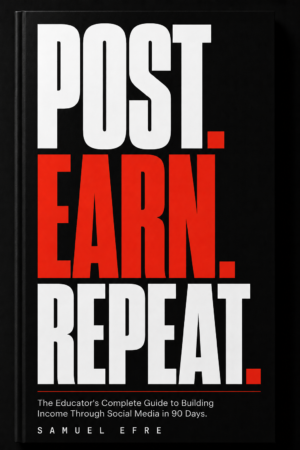
Tutoring is one way to earn from what you know. Post. Earn. Repeat. is the educator’s guide to building income through social media in 90 days, turning the knowledge you already share every day into content and income that doesn’t depend on trading every hour.
How did this land?
Tap a reaction. It helps us write more of what teachers need.



Join the conversation
No comments yet. Be the first to share how this works in your classroom.