Teachers Earn Two-Thirds of What Other Graduates Make. Some Are Closing That Gap Without a Second Shift

Your payslip lists your hours and your lessons. It doesn’t list the methods you built, the expertise you earned or the reputation you have. That value is real. It just isn’t counted yet.
Most teachers already know the pay gap is real. A Brookings analysis published in October 2026 found U.S. primary school teachers earn less than two-thirds of what other college graduates earn, placing the United States last among the more than 30 countries it compared. RAND’s 2026 State of the American Teacher survey put the average teacher base salary at $75,599, against just over $105,000 for similar working adults.
The usual response is a second shift. Weekend tutoring. Summer jobs. Driving for a rideshare app after a full school day. It works, in the sense that money comes in. But it trades more of your limited time and energy for every dollar, and teachers don’t have much of either to spare.
There’s another way to think about it. You already have something valuable: years of knowledge about how people learn, how to explain hard things simply, how to run a room, how to plan. Some educators are building income from that knowledge, without quitting their jobs and without adding a second exhausting shift.
This guide is for teachers who want to understand their options. You’ll learn why your expertise is worth more than your salary counts, the main ways educators are earning from what they know, and how to choose a first step that fits your life. One honest note before we start: there are no guarantees here. Results depend on time, effort, skill and luck. Anyone who promises a specific income is selling something you shouldn’t buy.
1. Why your expertise is worth more than your salary counts
Your salary pays for your time in the classroom. It doesn’t pay for everything you know.
What you already have
- Teaching methods you’ve refined over years: how to introduce a hard concept, how to get a quiet class talking, how to calm a loud one.
- Resources you’ve made: lesson plans, worksheets, routines, rubrics.
- Knowledge other people are searching for: parents who want to help at home, new teachers who feel lost, schools that need training.
- Credibility: you’ve done the job, in real classrooms, with real students.
All of that is a kind of intellectual property. Right now, most teachers give it away for free, or don’t use it at all outside their own room.
What not to do
- Don’t assume what you know is “just part of the job.” The skills that feel ordinary to you are often exactly what someone else needs.
2. The main ways educators earn beyond their salary
There’s no single path. Educators earn in different ways depending on their strengths, time and interests.
The options
- Visibility: building an audience by sharing useful ideas online, which can lead to other opportunities.
- Content: creating videos, posts or newsletters that teach, sometimes earning through ads, sponsors or subscriptions.
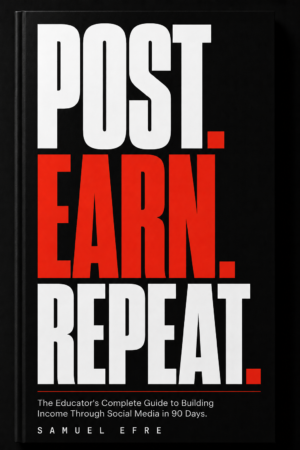
- Publishing: writing books, guides or workbooks for teachers, parents or students.
- Digital products: selling resources like lesson plans, printables or templates.
- Training and consulting: running workshops or advising schools.
- AI-related work: helping schools and educators use AI tools well.
- Edtech: working with education technology companies, in content, testing or advising roles.
- Community: building paid groups, memberships or courses for educators or families.
- School business: starting or growing tutoring centers, learning programs or schools.
You don’t need to do all of these. Most people start with one.
Matching paths to strengths
If you’re not sure where to start, match the path to what you’re already good at:
- You love writing: publishing, newsletters or written guides.
- You love speaking: workshops, training, video content or consulting.
- You love making materials: digital products like templates, printables and planners.
- You love connecting people: a community, membership or study group for educators or families.
- You love technology: AI training for colleagues, edtech roles or tool reviews.
- You love building systems: consulting for schools, or growing a learning business.
The best first path is usually the one you’d happily do even before it earns anything, because those early months rarely pay much.
3. Check your rules before you start
Before you earn anything outside your classroom, make sure you’re doing it within your district’s rules.
The strategy
- Read your outside employment policy. Many districts have rules about side work, disclosure and conflicts of interest.
- Don’t use school time or resources. Build outside work on your own time, with your own equipment.
- Be careful with materials you made for school. Some districts have policies on who owns materials created as part of your job. Check before selling them.
- Keep students out of it. Don’t market to your own students or their families, and don’t use student work or images without proper permission.
For tutoring specifically, read can teachers tutor their own students for money.
4. Choose your first move without quitting your job
The biggest mistake is trying to do everything at once. Start small, with something that fits your existing week.
The strategy
Ask yourself three questions:
- What do people already ask me about? Colleagues, parents, new teachers. That’s often your first topic.
- What do I enjoy creating? Writing, speaking, designing, organizing. Pick a path that uses it.
- How much time do I really have? Be honest. Two hours a week is enough to start something small and steady.
Then choose one path and commit to it for a few months before judging it.
What it looks like in practice
Picture a middle school teacher whose colleagues keep asking for her classroom routines. She doesn’t launch a business. She tidies up five of her best routines into a short guide and shares a few of them online to see if people find them useful. If they do, that’s a signal to build more. If not, she’s lost a few evenings, not a career.
5. Build something sustainable, not another burnout
A side income that burns you out isn’t a solution. It’s a second problem.
The strategy
- Protect your rest. Set a weekly limit on outside work and keep it.
- Build once, sell many times. Products and content can keep earning after you make them, unlike hours of tutoring.
- Reuse what you already make. The materials and ideas from your teaching can become the starting point for what you create.
- Grow slowly. Steady progress over a year beats an exhausting month that you abandon.
What not to do
- Don’t promise yourself fast results. Most sustainable income takes months to build.
- Don’t pay for expensive courses that promise quick money before you’ve tested your idea for free.
If you’re feeling worn out already, read thinking of quitting teaching mid-year before adding anything new to your plate.
6. Treat it like real work
When outside income starts, treat it seriously.
The basics
- Keep records of what you earn and spend.
- Learn the tax basics. Income outside your salary is usually taxable, and self-employment income can carry extra tax. A tax professional can tell you what applies.
- Separate your accounts once money starts coming in regularly.
- Protect your brand. Keep your teacher identity and your professional reputation consistent and positive.
7. Questions to ask before you spend money
You’ll see plenty of offers promising to help teachers earn money. Some are useful. Some aren’t. Ask:
- Does it make specific income promises? Be wary.
- Can I test the idea for free first?
- Is it built by people with real teaching experience?
- Does it show how to start without quitting my job?
- Does it help me build something sustainable, or just sell me a dream?
For more on how teachers are already earning online, read how teachers are earning money online.
8. A simple 90-day starter plan
If you want a structure for your first three months, here’s one that fits around a full teaching load.
Days 1 to 30: Choose and test
- Pick one path and one audience, such as new teachers, parents of early readers, or school leaders.
- Write down ten questions that audience asks.
- Share a few genuinely useful answers where that audience already spends time.
- Notice which ideas get the most interest. That’s your signal.
Days 31 to 60: Build one thing
- Turn your strongest idea into one small, finished thing: a short guide, a template, a workshop outline or a series of posts.
- Keep it small enough to finish in the time you have.
- Ask a few colleagues or friends to try it and tell you honestly what’s missing.
Days 61 to 90: Offer it and learn
- Offer it to the audience you’ve been helping, for free or for sale.
- Track what happens: who’s interested, what questions they ask, what they’d pay for.
- Decide your next step based on what you learned, not on what you hoped.
What not to do
- Don’t spend the 90 days designing a logo and a website before anyone has seen your idea.
- Don’t judge the whole plan by the first month. Early results are usually small.
9. What to say when people ask what you’re doing
Colleagues and administrators may notice your outside work. A clear, simple answer keeps things professional.
Say this
“I share some of my teaching resources and ideas outside school, on my own time. I keep it completely separate from my classroom and my students, and I’ve checked our outside employment policy.”
That answer covers the three things people usually worry about: time, students and rules.
What not to do
- Don’t promote your outside work in staff meetings or school channels unless your school invites it.
- Don’t let it become the topic of every conversation with colleagues. Your teaching still comes first at school.
What actually works: the short version
Your knowledge as a teacher has value beyond your salary:
- Recognize your expertise as something you own.
- Learn the main ways educators earn: visibility, content, publishing, products, training, AI, edtech, community and school business.
- Check your district’s rules before you start.
- Choose one first step that fits your week.
- Build slowly and sustainably.
- Treat it as real work, with records and basic tax awareness.
Try this tomorrow
- Write down three things people regularly ask you about.
- Pick one of the nine paths that fits your strengths.
- Find and read your district’s outside employment policy.
- Decide how many hours a week you can honestly give.
- Write one useful tip you could share with other teachers.
Keep Reading
- School Leaders: Your Teacher Training Isn’t Changing Classrooms. Here’s What the Best Schools Do Instead.
- 57% of Teachers Are Burned Out. The Cause Most Never Spot Is Hiding in Their Week.
- Parent-Teacher Conferences: One Question Turns Angry Parents Into Allies. Ask It First.
Frequently asked questions
How can teachers earn extra income without a second job?
Many educators turn their knowledge into income through content, publishing, digital products, training or communities. These can grow over time without trading every hour. Results vary, and there are no guarantees.
Is it legal for teachers to have a side business?
Generally yes, but your district may have rules on outside employment, conflicts of interest and use of school materials. Check your policy and contract before you start.
Can I sell lesson plans I made for my school?
It depends on your district’s policy on materials created for your job. Some districts claim ownership of work made on school time or with school resources. Check before selling.
How much can teachers earn from digital products?
It varies enormously. Some earn very little, others build significant income over years. Be skeptical of anyone promising specific amounts.
How much time does it take to start?
A few hours a week is enough to start something small. Most sustainable income takes months of steady effort to build.
Map your own path
The Teacher Economy shows how educators turn their knowledge, skills, experience and influence into sustainable income beyond the salary. It maps the nine economies open to educators today: visibility, content, publishing, digital products, training and consulting, AI, edtech, community and school business.
You’ll learn why your expertise is intellectual property and how to treat it that way, how to choose your first move without quitting your job, and how to build something sustainable instead of a side hustle that burns you out. Worksheets help you plan your own path.
For every teacher who has been told what they know is “just part of the job.” It never was.
How did this land?
Tap a reaction. It helps us write more of what teachers need.


Join the conversation
No comments yet. Be the first to share how this works in your classroom.