Teachers Post Online Every Day and Earn Nothing. One Shift Changes That.
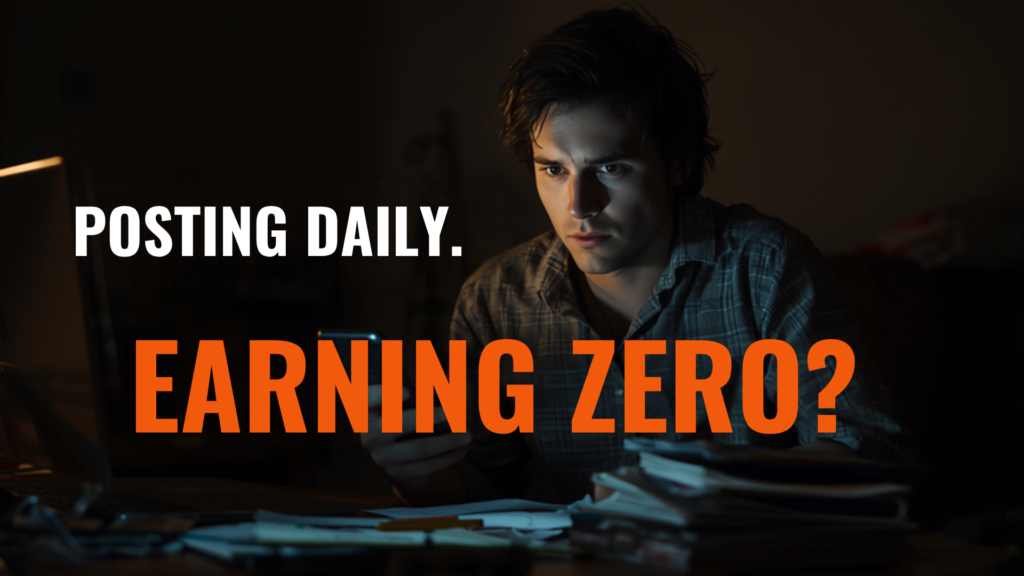
You post teaching tips every day. A few likes from colleagues, a heart from your aunt, and not one sale. The problem isn’t that you’re not good enough. It’s one shift almost every teacher-creator misses.
It’s 9:40pm. You’ve finished grading. You open your phone and post today’s classroom tip: a clever routine, a photo of a display, a quote about teaching. Twelve likes. Two comments, both from teachers you already know.
You’ve been doing this for months. Maybe you’ve even made a resource, a printable or a small ebook, and linked it in your bio. Total sales: zero. Or three, all from friends.
You’re not alone. Thousands of teachers worldwide are trying to build a second income online: selling resources, offering tutoring, creating courses, growing a following. Most work hard, post often and earn very little. Not because they lack knowledge. Teachers know more about learning than almost any other content creator.
The problem is usually one shift. Most teachers post for other teachers to admire. The ones who earn post to solve one specific problem for one specific person, and they make it obvious what to do next.
This article is for teachers who want their online content to turn into income without quitting the classroom. You’ll learn why “posting daily” doesn’t pay, the shift that changes it, what to post instead, how to build a simple path from post to purchase, and a 14-day plan.
1. Why Posting Every Day Isn’t Paying
You’re posting for applause, not for a buyer
A beautiful classroom display gets likes from other teachers. But other teachers who admire your display rarely need to buy anything from you. Likes from peers feel good and pay nothing.
Your content is about you, not about their problem
“Here’s what I did in my class today” is a diary. “Here’s how to get a noisy 7th grade class silent in under ten seconds” is a solution. People pay for solutions.
There’s no next step
Many teacher accounts post great content with no clear path to anything else. No free resource, no email list, no product mentioned. A reader who loves your post has nowhere to go.
You’re trying to reach everyone
“Tips for teachers” is too broad. “Behavior strategies for new secondary teachers” or “phonics games for parents of four-year-olds” is clear. Clear audiences find you, trust you and buy from you.
What not to do
Don’t respond to low sales by posting more of the same. Volume without the shift just makes you tired.
2. The Shift: From Sharing to Solving
The strategy: one person, one problem, one result
Before you post anything, answer three questions:
- Who exactly is this for? Not “teachers”. A first-year primary teacher? A department head? A parent of a struggling reader?
- What problem do they have right now? Use their words, not yours: “My class won’t stop talking” rather than “behavior management strategies”.
- What result will they get from this post? Something they can try tomorrow.
Before and after
- Before: “Loved our science lesson today! 🔬✨”
- After: “New teachers: if your practicals turn into chaos, try the ‘waiting card’. Three questions on every bench for groups who finish early. Behavior during practicals dropped to almost nothing in two weeks.”
The second post tells the right person exactly why they should care, and gives them something useful. That’s the post that gets saved, shared and remembered.
3. What to Post Instead
The four post types that build trust and sales
- Problem-solution posts. One problem, one practical fix, written so it can be used tomorrow.
- Scripts. Exact words to say in hard moments. Teachers save these more than almost anything else.
- Before/after stories. “This class went from X to Y in two weeks. Here’s what changed.” Specific, real, honest.
- Myth-busting. “You don’t need a reward chart. Here’s what works better.” Opinions with reasons get engagement.
What to post less
- Quotes and generic motivation.
- Desk and classroom aesthetics, unless your niche is classroom design.
- Long reflections with no practical takeaway.
Say this (hook formulas that work for teacher content)
- “If your [specific class/situation] keeps [problem], try this tomorrow.”
- “The thing nobody tells [new teachers/school leaders/parents] about [topic]…”
- “I stopped [common practice] and [result happened]. Here’s why.”
- “3 words that [result] (and 1 phrase that makes it worse).”
4. Build a Simple Path From Post to Purchase
Most teachers jump straight from “post” to “buy my product”. It rarely works. People need a middle step.
The three-step path
- Post: Solves a small problem for free.
- Free resource: Solves a bigger version of the same problem in exchange for an email address. A checklist, a short guide, a set of scripts.
- Paid product: Solves the full problem in depth. A book, a course, a toolkit, a coaching session.
Why this works
The free resource proves you can help. The email list lets you stay in touch without depending on an algorithm. When you mention your paid product, you’re talking to people who already trust you.
A real example
A secondary teacher posted behavior tips for a year with almost no sales. She made one change: every post about behavior ended with “I’ve put my 10 best scripts for difficult moments in a free PDF, link in bio.” The free PDF collected email addresses. Once a fortnight she emailed one practical tip, and once a month she mentioned her paid behavior guide. Her posts didn’t get more likes. But her guide started selling every week, mostly to people who’d downloaded the free PDF first.
5. Choose One Platform and One Niche
The strategy
- Pick one platform where your ideal person already spends time. Primary teachers and parents often on Facebook and Instagram; school leaders and consultants on LinkedIn; younger teachers on TikTok and Instagram; long-form explainers on YouTube.
- Pick one niche you can talk about for a year without running out of ideas. Behavior, early reading, math anxiety, teacher wellbeing, AI for teachers, school leadership.
- Post consistently, three to five times a week is plenty, better than daily posts you can’t sustain alongside teaching.
What not to do
Don’t try to be on six platforms at once while working full-time. You’ll burn out before anything grows. Master one, then repurpose to others.
6. Protect Your Teaching Job and Your Reputation
Check the rules
Many schools and education authorities have policies about outside work, social media and selling resources. Check yours before you start. Some don’t allow you to sell materials created on school time or with school resources.
Keep students private
Never post students’ faces, names, work with identifying details or anything that could identify them without the right permissions. Your audience doesn’t need to see your students to trust you.
Separate your accounts
Keep a professional teaching account separate from your personal one. It protects your privacy and makes your niche clearer.
7. Your 14-Day Plan
Days 1–3: Get clear
- Write one sentence: “I help [specific person] [achieve result] without [common frustration].”
- List 20 problems that person has, in their own words.
Days 4–7: Make the free resource
- Turn your three best solutions into a short PDF: a checklist, scripts or a mini-guide.
- Set up a free email sign-up page (many email tools have free plans).
Days 8–14: Post with purpose
- Post five problem-solution posts from your list of 20.
- End each with a clear next step to your free resource.
- Reply to every comment within a day.
- At the end of day 14, count email sign-ups, not likes. That’s your real number.
8. Price Your First Product Without Underselling Yourself
Once followers start asking for your resources, the next question is what to charge. Many teachers either give everything away for years or set prices so low that even a few hundred sales barely cover a dinner out. Pricing well isn’t about greed. It’s about building something that can keep paying you while you keep teaching.
Start with the problem, not the hours
Teachers often price by asking “how long did this take me?” Buyers don’t think that way. They think, “how much time, stress or confusion will this save me?” A set of ready-made behavior scripts that rescues a new teacher’s first month is worth far more to them than the four evenings it took you to write.
Before you set a price, write one sentence finishing this line: “This saves a teacher from…” If the answer is big (hours of planning every week, a failed observation, a term of chaos), your price can reflect that.
Use three simple price points
A clear ladder makes it easy for followers to start small and grow with you.
- Entry product: a single printable, checklist or short guide. Low price, easy yes. This is how strangers become buyers.
- Core product: a complete pack, mini-course or toolkit that solves one problem properly. This is where most of your income comes from.
- Premium offer: live training, coaching, a whole-school workshop or a bundle of everything. Fewer buyers, much higher value.
Most teachers only ever build the first rung. The real income sits in the second and third.
Check what similar products cost
Spend thirty minutes looking at what other educators charge for comparable resources on teacher marketplaces and creator platforms. Don’t copy the cheapest. Position yourself in the middle or upper middle, and make your product clearly better: tested in real classrooms, easy to use on Monday morning, with clear instructions.
Price for your global audience
Your followers may live in several countries with very different incomes. A few practical options help:
- Sell in a major currency and let the platform handle conversion.
- Offer occasional regional discounts through coupon codes rather than permanently lowering your main price.
- Create a free sample so teachers can test your quality before they pay.
Raise prices as proof grows
Your first price is a starting point, not a promise. Once you have ten genuine reviews, a few stories of teachers using your resource well, or a waiting list for your next launch, raise the price for new buyers. Early customers feel rewarded, and new customers see a product with evidence behind it.
Your next step
Pick one resource you’ve already made for your own classroom. Write the “this saves a teacher from” sentence, choose which rung it belongs on, and set a price this week. A product that’s live at a fair price will teach you more in a month than a year of thinking about it.
What Actually Turns Teacher Content Into Income
- Post to solve, not to impress. One person, one problem, one result.
- Use their words for their problems.
- Build a path: post → free resource → paid product.
- One platform, one niche, sustainable consistency.
- Protect your job and your students.
Try This Tomorrow
- Rewrite your bio as one sentence: who you help and what result you give them.
- Turn tomorrow’s post into a problem-solution post using one of the hook formulas.
- Write down 20 problems your ideal reader has.
- Pick the three best solutions you already know for a free resource.
- Check your school’s policy on outside work and social media.
Keep Reading
- Thinking of Quitting Teaching Mid-Year? Read This Before You Hand In the Letter.
- School Leaders: Your Teacher Training Isn’t Changing Classrooms. Here’s What the Best Schools Do Instead.
- 57% of Teachers Are Burned Out. The Cause Most Never Spot Is Hiding in Their Week.
Frequently Asked Questions
Can teachers make money online?
Yes. Many teachers earn extra income from selling resources, tutoring, writing books, creating courses or consulting. It usually takes a clear niche, consistent useful content and a simple path from free content to a paid product.
Why am I not making money from my teaching content?
Common reasons are posting for other teachers’ approval rather than solving a buyer’s problem, an audience that’s too broad, and no clear next step from your posts to a free resource or product.
What should teachers post on social media to grow?
Problem-solution posts, scripts for difficult moments, specific before-and-after stories and myth-busting opinions with reasons. Each post should help a specific person do something tomorrow.
Do I need a big following to sell teaching resources?
No. A small audience that trusts you and has joined your email list can be more valuable than a large one that only likes your posts.
Is it allowed for teachers to sell resources online?
It depends on your employer’s policy. Check rules about outside work, social media and materials created on school time before you start, and never share identifiable student information.
Want a Simple System for Turning Posts Into Income?
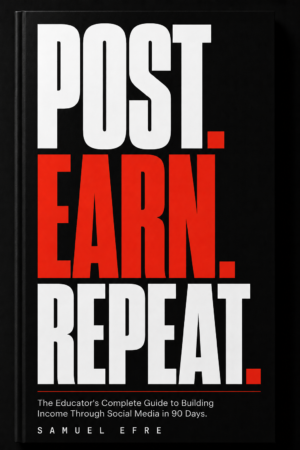
The shift from posting to earning doesn’t need a huge following. It needs the right content and a clear path. Post. Earn. Repeat. shows teachers how to create content that solves real problems and turns readers into buyers, step by step. Get Post. Earn. Repeat. here.
How did this land?
Tap a reaction. It helps us write more of what teachers need.




Join the conversation
No comments yet. Be the first to share how this works in your classroom.