Group Work Keeps Turning Into One Student Working While Four Watch. Here’s the Structure That Ends It.
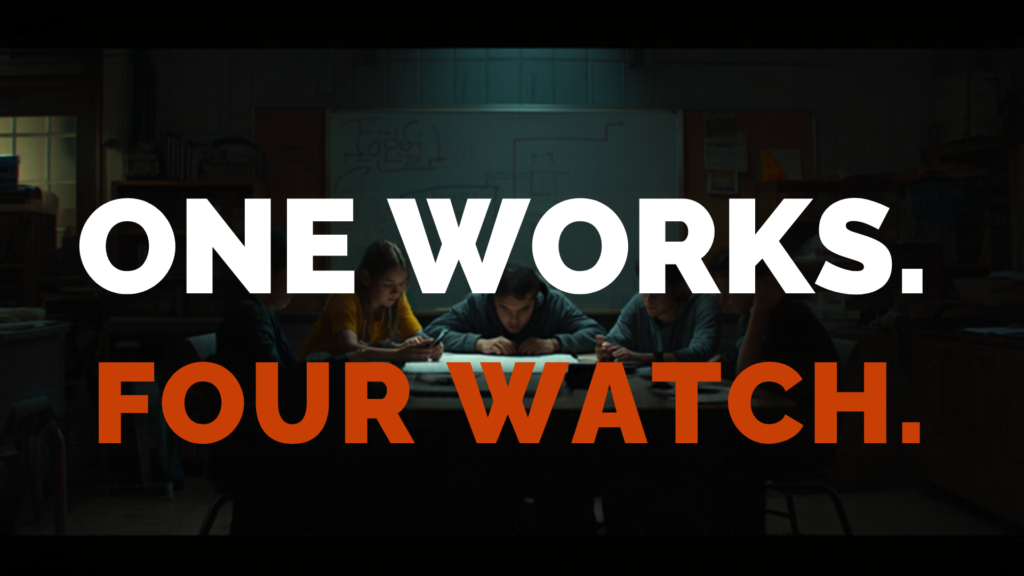
You planned a rich group task. Ten minutes in, one student is doing all the work, two are chatting, one is on a phone and one is drawing in the margin. Group work doesn’t fail because students are lazy. It fails because of structure.
You put the class into groups of five. You hand out the task, a big sheet of paper and some colored pens. You explain that everyone should contribute.
Ten minutes later you walk around. At every table it’s the same picture. One student, usually the most conscientious, is writing everything. One is “checking” by watching. Two are talking about the weekend. One has quietly opted out entirely. When the groups present, the same confident student speaks for every table.
At the end, you’re not sure what most of the class learned. And the student who did all the work is annoyed, because they always do all the work.
Group work is one of the most common frustrations teachers mention, at every level and in every country. But the problem is almost never the students. It’s that most group tasks, as designed, allow one person to do the work. If the structure lets four people watch, four people will watch.
This article is for teachers who want group work that actually involves everyone. You’ll get the reasons groups collapse into one worker, the four design rules that fix it, roles that really work, exact words to use, and a structure you can run tomorrow.
1. Why One Works and Four Watch
The task can be done by one person
If a single capable student can complete the whole task alone, they usually will. It’s faster for them, and the others are happy to let them. Most “group” tasks are really individual tasks done in a group.
Nobody is individually accountable
When the group is assessed as one, individuals can hide. If the only thing anyone checks is the final poster, the poster is all that matters.
Groups are too big
In a group of five, it’s easy to disappear. In a pair or a three, it’s much harder.
Roles are vague or fake
“Everyone should contribute” is not a role. And roles like “timekeeper” or “materials manager” often mean one student does the thinking and the others do admin.
What not to do
Don’t fix it by telling the class off for not working together. They’re responding sensibly to the structure you gave them. Change the structure.
2. Rule One: Make the Task Need Everyone
The strategy
Design tasks where no one student has everything needed to finish.
- Jigsaw: Each group member gets a different piece of information. The group can only solve the problem by combining all of them.
- Split the thinking: Each member answers a different sub-question, then the group builds the final answer from all of them.
- Different perspectives: In a debate or analysis, each student argues from a different viewpoint assigned by you.
A real classroom example
A 8th grade history teacher replaced “make a poster about the causes of the war” with a jigsaw. Each student in a group of four received a different source: a political cartoon, a diary entry, a speech and a statistic. To answer the question “Which cause mattered most?”, the group had to hear from all four sources. She noticed something immediately: the quiet students suddenly had information the confident students needed, so they were asked to speak. Participation evened out within one lesson.
3. Rule Two: Make Everyone Individually Accountable
The strategy
Every student must produce something, or be ready to explain something, on their own.
- Random reporter: Don’t let groups choose who presents. Number students one to four and roll a dice. Everyone must be ready.
- Individual exit question: After the group task, each student answers one question alone about what the group found.
- Name your part: On the final product, each student initials the section they contributed.
- Individual write-up: The group discusses; each student writes their own conclusion.
Say this
- “In five minutes I’ll choose who explains your group’s answer. It could be anyone, so make sure everyone in your group could do it.”
- “Your group can help you understand, but your exit question is yours alone.”
Why this works
When anyone could be asked, everyone makes sure they understand. The confident student starts teaching the others, which is exactly the learning you wanted.
4. Rule Three: Keep Groups Small
The strategy
- Pairs for most discussion and practice.
- Threes for problem-solving tasks.
- Fours only for jigsaw-style tasks where four pieces are needed.
- Fives or more almost never.
Why this works
In a pair, there’s nowhere to hide: if you don’t talk, there’s no conversation. In a three, every voice matters. Smaller groups also make your circulating much more effective, because problems are easier to spot.
What not to do
Don’t make groups bigger to reduce the number of presentations. Shorter, randomly chosen reports from a few groups work better than every group presenting.
5. Rule Four: Use Roles That Carry Thinking
Roles work when each one requires the student to think about the content, not just manage the group.
Roles that work
- Questioner: Asks “How do we know?” and “What’s the evidence?” at least twice.
- Summariser: Every few minutes, sums up what the group has agreed so far.
- Challenger: Finds one weakness or alternative in the group’s answer.
- Connector: Links the group’s ideas to something learned earlier.
Roles to avoid (or combine)
- Timekeeper, materials manager, scribe on their own. These often mean “not thinking”. If you use them, give them a thinking role as well.
Say this
- “Questioners: your job is to ask ‘how do we know?’ twice before you finish. I’ll be listening for it.”
- “Challengers: before you write your final answer, I want one ‘yes, but…’ from you.”
Rotate roles every lesson so students practice all of them.
6. Teach Students How to Work Together
Why this matters
Many students have never been taught how to discuss: how to disagree politely, how to bring in a quiet member, how to build on an idea. They need the language.
The strategy: talk prompts on the table
Put a small card on each table with sentence starters:
- “I agree with ___ because…”
- “I see it differently because…”
- “Can you explain what you mean by…?”
- “We haven’t heard from ___ yet. What do you think?”
- “So far we’ve agreed that…”
Model one or two before the task. Praise students who use them, specifically: “I heard Amaka say ‘We haven’t heard from Tunde yet.’ That’s exactly the kind of thing that makes a group work.”
7. The Group Work Structure You Can Run Tomorrow
Before (5 minutes)
- Explain the task and why it needs everyone.
- Put students in groups of three, assigned by you.
- Hand out roles and the talk prompt card.
- Tell them a random reporter will be chosen.
During (15–20 minutes)
- Set clear checkpoints: “By 10:20 you should have answered part A.”
- Circulate and listen. Ask individual students, not the group, “What has your group decided so far, and why?”
- Use your attention signal to stop the class halfway and share one good example of group talk.
After (10 minutes)
- Choose reporters randomly from two or three groups.
- Every student answers one individual exit question.
- Quick reflection: “What did your group do well? What would make it better next time?”
What not to do
- Don’t spend the group time grading at your desk. Circulating is where the accountability comes from.
- Don’t let groups present for twenty minutes. Short, random reporting keeps everyone ready and saves time.
For the routines that make transitions into and out of group work smooth, see classroom management as a system. And if your class tends to get loud during group tasks, these noise strategies help.
8. How to Grade Group Work Fairly
Even a well-designed group task can fall apart at the grading stage. If everyone gets the same grade, the hard workers feel cheated and the passengers learn that coasting pays. If you only grade individuals, students stop bothering to help each other. The answer is to grade both, and to tell students exactly how before they begin.
Split the grade into two parts
A simple split works for most tasks:
- Group product (around half the grade): the poster, presentation, experiment write-up or solution the group produces together.
- Individual evidence (the other half): something each student produces alone that shows what they personally understood.
Announce the split on day one of the task and put it on the task sheet. Students behave differently when they know half their grade depends on what they can show on their own.
Make the individual part quick to mark
You don’t need a second essay from every student. Short, focused checks work better and take far less grading time.
- Exit question: a single question about the group’s topic, answered alone in the last five minutes.
- Random presenter: any group member can be asked to explain any part of the work, chosen by you on the day.
- Two-minute oral check: while groups work, visit each table and ask one student a specific question.
- Reflection note: three sentences on what they contributed, what they learned and what they’d do differently.
The random presenter is especially powerful. When nobody knows who will be asked, everybody makes sure they understand the whole project.
Use peer feedback carefully
Asking students to rate each other can reveal who did the work, but it can also turn into popularity voting or settling scores. If you use it, keep it private and specific. Ask each student to describe one thing every group member contributed, rather than giving them a score. Vague or unkind comments tell you something too, and you can follow up quietly.
Track contribution while it happens
Carry a class list on a clipboard during group work. Each time you visit a table, put a quick tick next to students who are clearly contributing and a dot next to anyone who seems disengaged. After three or four lessons you’ll see patterns that no final product can show you. This also gives you evidence if a parent or student questions a grade later.
Talk to the passenger, not the group
When one student consistently does little, speak to them privately rather than in front of their group.
Say this: “I’ve noticed the others are carrying most of this. What’s getting in the way for you?”
Sometimes the answer is laziness. Often it’s confusion, shyness, or a conflict within the group that you can fix. Either way, a private conversation gets you the truth faster than a public telling-off.
Share the grading criteria in student language
Before the task begins, show students a strong example and a weak example, and ask them to spot the difference. When students can describe what good group work looks like in their own words, the quality of what they produce rises noticeably, and so does their sense that the grading is fair.
What Actually Makes Group Work Fair and Effective
- Design tasks that need everyone, such as jigsaws and split thinking.
- Make each student accountable: random reporters and individual exit questions.
- Keep groups small: pairs and threes most of the time.
- Use thinking roles, not just admin roles, and rotate them.
- Teach the talk: sentence starters for agreeing, disagreeing and including others.
Try This Tomorrow
- Turn your next group task into a jigsaw, with each student holding different information.
- Make groups of three and assign them yourself.
- Tell students a random reporter will explain each group’s answer.
- Put a talk prompt card on every table.
- End with one individual exit question about the group’s work.
Keep Reading
- Your Classroom Rules Are Fine. How You Introduce Them Is the Problem.
- “Do You Have Any Food?” and the Other Daily Student Questions That Drain You. Answer Them Once.
- Friday Afternoon Chaos Starts With Something You Stopped Doing on Wednesday.
Frequently Asked Questions
Why does group work fail in the classroom?
Usually because the task can be done by one student, nobody is individually accountable, groups are too large, or roles don’t involve real thinking. Changing the structure fixes most of these problems.
How do you stop one student doing all the work in a group?
Design tasks that need everyone’s input, such as jigsaw activities, choose presenters at random, and finish with an individual question each student answers alone.
What is the best group size for group work?
Pairs and groups of three work best for most tasks. Groups of four suit jigsaw tasks with four pieces of information. Larger groups make it easy for students to opt out.
What roles should students have in group work?
Roles that involve thinking work best: questioner, summariser, challenger and connector. Purely administrative roles like timekeeper should be combined with a thinking role.
How do you assess group work fairly?
Assess individuals as well as the group: random reporters, initialled contributions, individual write-ups or a short individual exit question.
Want Group Work That Runs Itself?
Great group work isn’t luck. It’s design. The Group Work Playbook gives you ready-to-use structures, roles, talk prompts and assessment ideas, so every student contributes and you can actually see the learning. Get The Group Work Playbook here.
How did this land?
Tap a reaction. It helps us write more of what teachers need.



Join the conversation
No comments yet. Be the first to share how this works in your classroom.